Choose your productStart with the bag or film format that fits your application.

CUSTOM PACKAGING / PROTECTIVE FILMS
Custom Packaging Bags
& Protective Films
Source plastic shopping bags, degradable bags, pre-taped masking film and flexible food packaging. Customize dimensions, materials and printing for your project, with quality checks aligned to the approved specification.
01Plastic Shopping BagsHDPE and LDPE / custom printing
02Degradable BagsMaterial and bag-style options
03Pre-Taped Masking FilmPainting and renovation protection
04Flexible PackagingPouch formats and laminate options
Confirm custom specificationsDefine dimensions, material, printing and packing requirements.
Agree on quality checksAlign production and shipment checks with the approved specification.
06quality-control stages
04real product categories
03key sourcing decisions
01instant RFQ brief
FIND YOUR FORMAT
Choose the packaging first.
Then define the quality standard.
Select the product category closest to your sourcing requirement, then define its quality standard. Dimensions, thickness, color, printing, bag format, and packing method can all be customized for the project.
OUR APPROACH
Build quality control into the process,
not into the final correction.
Turn the abstract idea of quality into specifications, checkpoints, and records that buyers can understand and suppliers can execute, so quotation, production, and shipment follow the same reference.
- Multi-stage quality control
- Checkpoints based on approved specifications
- Batch information for production traceability
- Inspection scope tailored to each project
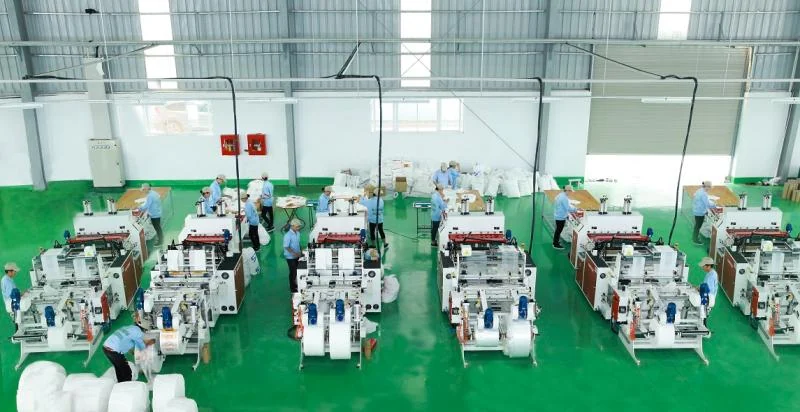
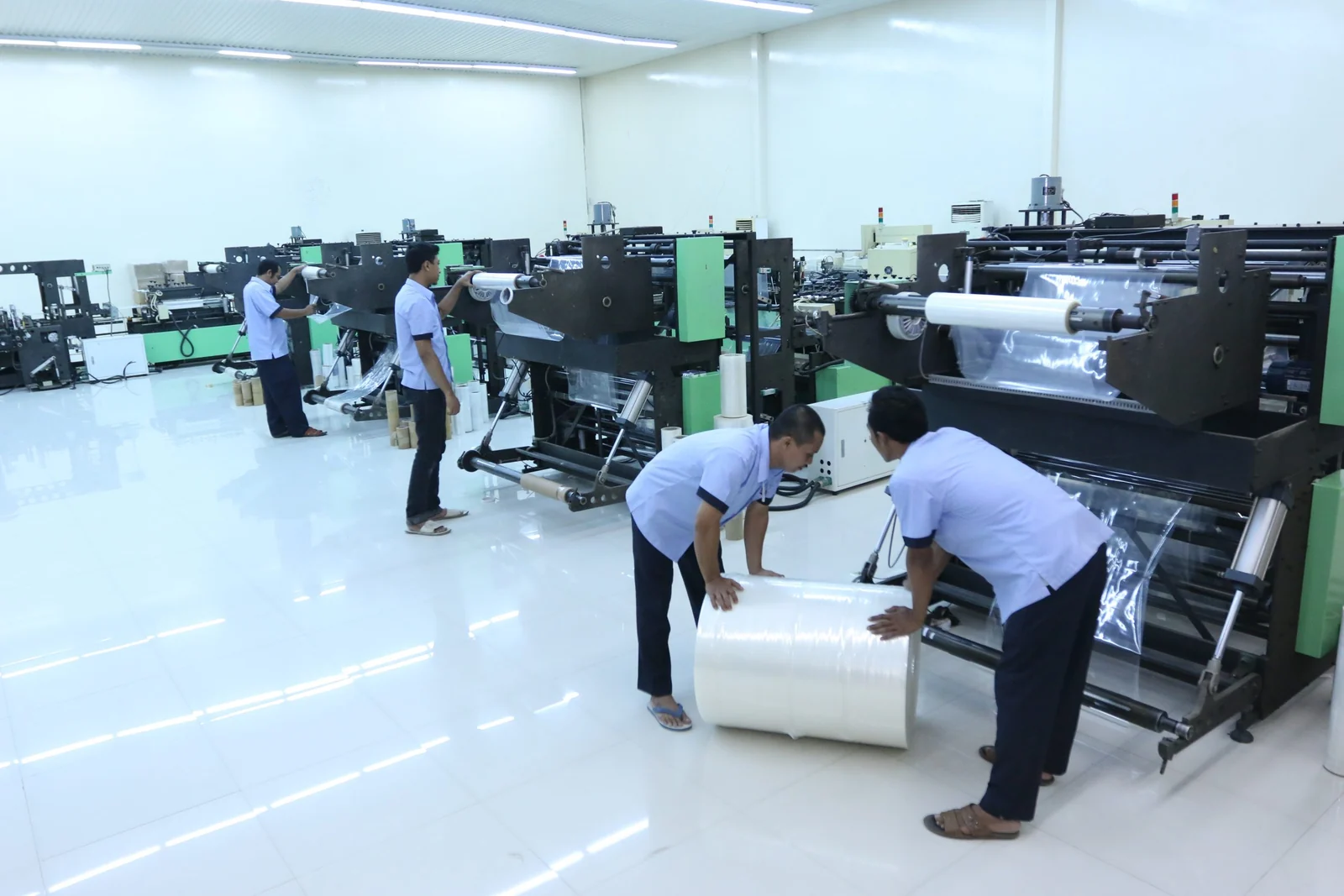
REAL PRODUCTION EVIDENCE
See the actual workshop.
Not a generated factory scene.
These factory photographs show production equipment, workshop organization, operators, and film converting work across four real manufacturing areas.


QUALITY CONTROL PROCESS
A multi-stage quality workflow
Start with a clear specification and organize material, production, and packing checks into one communicable workflow.
01
Incoming material inspection
Supplier batch records, material identification, thickness, and surface condition
- Batch document review
- Material specification check
- Appearance and cleanliness check
02
Film-blowing process inspection
Sampling during production for thickness, width, and winding condition
- Thickness monitoring
- Film width and format check
- Edge and appearance review
03
Print quality control
Color and position checks against the approved artwork
- Color-reference comparison
- Print registration check
- Smudging and surface check
04
Bag-making process inspection
Focus on dimensions, seals, opening method, and pack quantity
- Bag dimensions
- Seal alignment
- Pack quantity count
05
Packing and document verification
Keep carton information, packed quantity, and shipment documents consistent
- Carton-mark verification
- Inner and outer packing check
- Packing document preparation
06
Pre-shipment quality inspection
Review product performance, packing, and project notes before shipment
- Finished dimension sampling
- Print clarity check
- Approved-sample comparison
INSPECTION POINTS
Common inspection items
and checkpoints
Thickness and dimensionsSeal appearancePrint-reference comparisonSurface and contaminationQuantity and packingBatch reference recordsMaterial identificationProject-specific checkpointsBuyer document review
QUALITY DOCUMENTS
Quality documents must match
the actual sourcing scope
Document requirements depend on product use, destination market, buyer requirements, and the confirmed purchase scope.
No certification claim is made before project evaluation.
Food-contact use, recycled content, or market-specific requirements must be reviewed against the actual application and order scope.
Add document requirements to the RFQ →Review areaBuyer providesInternal reviewNext output
Specification confirmationDimensions, thickness, material, color, packing, and destinationCheck the sourcing scope against production and packing methodsSpecification summary
Material and market notesApplication, destination market, composition, and document requirementsEvaluate material options for the actual use caseCompliance review notes
Inspection record scopeSample reference, photo requirements, and inspection planAlign dimension, seal, print, and packing checkpointsPre-shipment checklist
Packing and shipment dataCarton marks, quantity, pallets, and destinationVerify packing information and shipment readinessShipment document points
RFQ BUILDER
Make one decision at a time.
Create a quality brief ready to send.
Choose the packaging type, share purchasing requirements, and define inspection priorities. Your draft is saved in this browser session while you move between steps.
STEP 1 / 5
Packaging type
Choose the packaging type closest to this sourcing project. Nothing is selected by default, so the wrong category will not be carried into the RFQ.
BUYER FAQ
Answer the key questions
before the detailed RFQ.
These answers are organized around sourcing decisions, helping buyers, search engines, and AI tools understand what information is needed next.
CONTENT REVIEWED: 2026-08-1901Where does plastic packaging quality control usually begin?+
It begins with a written specification. Confirm the bag format, material structure, dimensions and tolerances, thickness, print area, packing quantity, and destination market before planning incoming, in-process, and pre-shipment inspections.
02What is normally checked before shipment?+
Typical checks cover finished dimensions and thickness, seals and opening method, print appearance and registration, surface cleanliness, quantities per pack and carton, carton marks, and pallet information. The final scope should follow the purchase order and approved sample.
03Which quality documents are needed for food packaging?+
Document requirements depend on the food contact application, material structure, service temperature, destination market, and buyer requirements. The actual application should be reviewed before confirming available test reports, declarations, or third-party verification.
04How can color variation in custom printed bags be reduced?+
Before quotation and production, agree on an achievable color reference, artwork version, acceptable tolerance, and approval method. Check registration and surface appearance during production, then compare finished goods with the approved sample before shipment.
05How can repeat orders remain consistent?+
Keep a specification summary, approved sample or color reference, inspection records, packing method, carton-mark version, and special notes for each project. Review these references before starting every repeat production run.